Chapter 8: “Change Your Place to Change Your Mind”
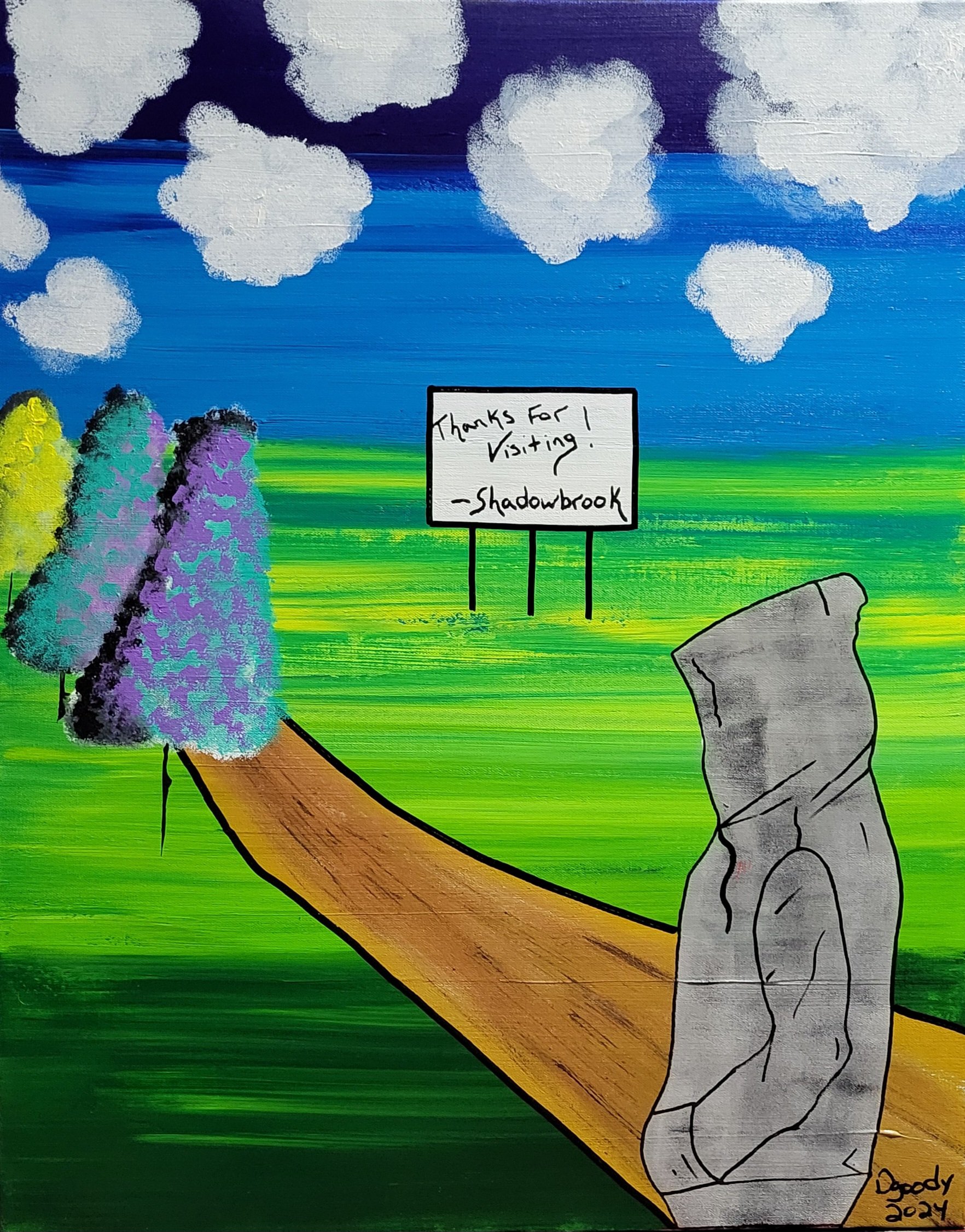
“Change your Place to Change Your Mind” is acrylic on a 24 × 30 × 1.5-inch canvas.
Ansel never believed geography could alter the landscape of the mind. He always assumed wherever he went, the unwelcome companion would follow, like a shadow stitched to his heels. However, therapy had planted a small, persistent idea in him: sometimes the body must move first, and the mind will follow.
He begins with simple shifts.
He rearranges his apartment, moving his desk closer to the window where the light, however little there is, can reach him. He replaces the heavy curtains with sheer ones, letting the morning lazily seep in. He clears the clutter from his shelves, discarding objects that feel like anchors to old versions of himself. These changes are small, almost trivial, yet they create a subtle spaciousness inside him, a sense that his environment is no longer a co-conspirator with his fear.
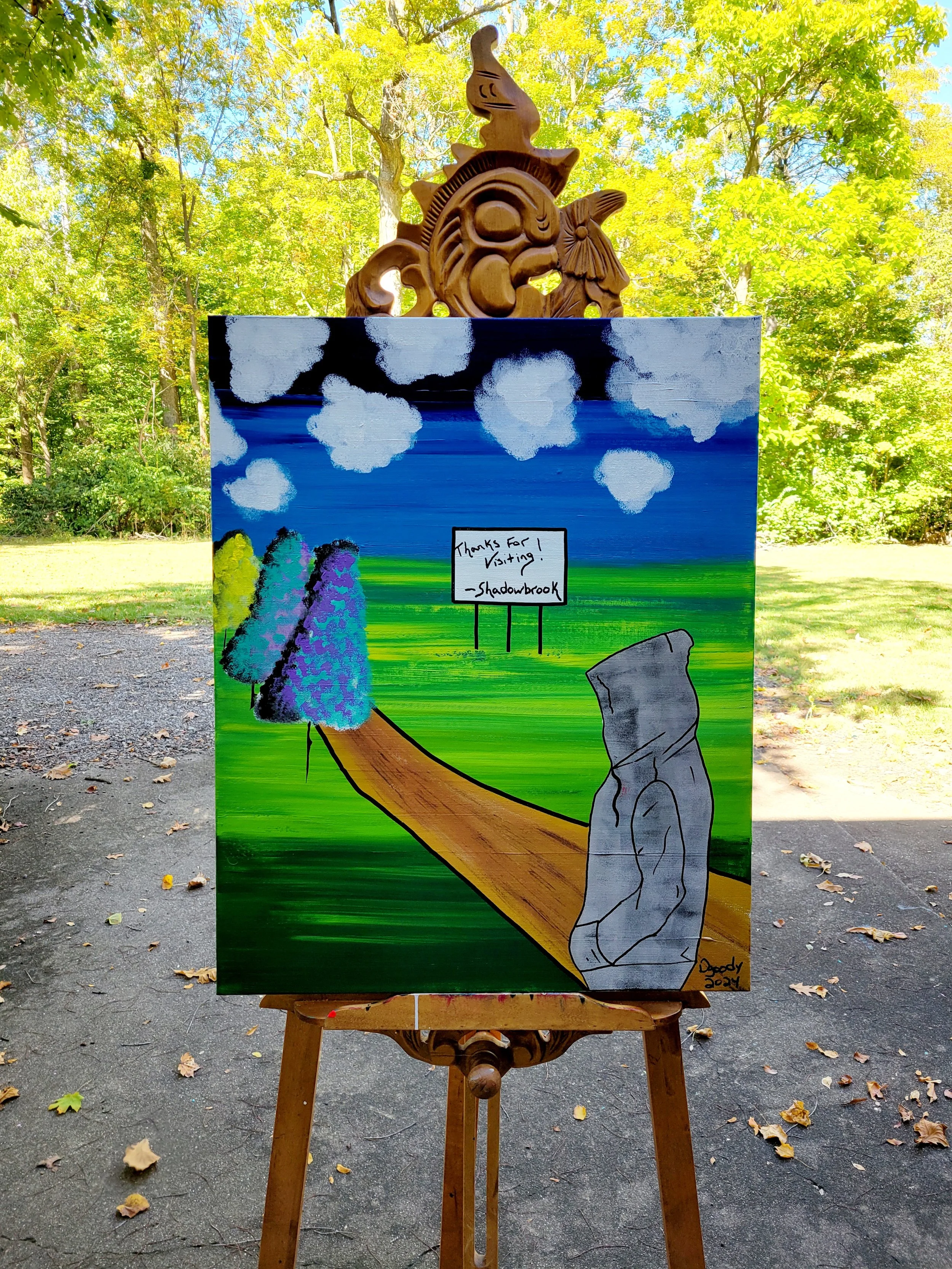
“Change Your Place to Change Your Mind” in natural light.
But the real transformation begins outside.
Shadowbrook’s streets, once familiar to the point of invisibility, become a kind of therapy in motion. Ansel walks without a plan or destination, letting his feet choose the route. He notices things he had long overlooked: the way the Brookshade River glimmers when the clouds are thin, the soft hum of the bakery’s early-morning ovens, and the moss that grows thick and velvety along the stone walls near the old church. These details ground him. They remind him that the world is larger than his thoughts.
On days when the fog lifts, (rare, precious days), he drives beyond the town limits. The road unwinds before him like a ribbon, leading him through forests, past open fields, toward horizons he hasn’t seen in years or maybe ever. With each mile, the tightness in his chest loosens. The companion still murmurs, warning of accidents and unknown dangers, but the rhythm of the road offers a counterpoint. The steady hum of the engine, the blur of trees, the widening sky all speak a language of possibility.
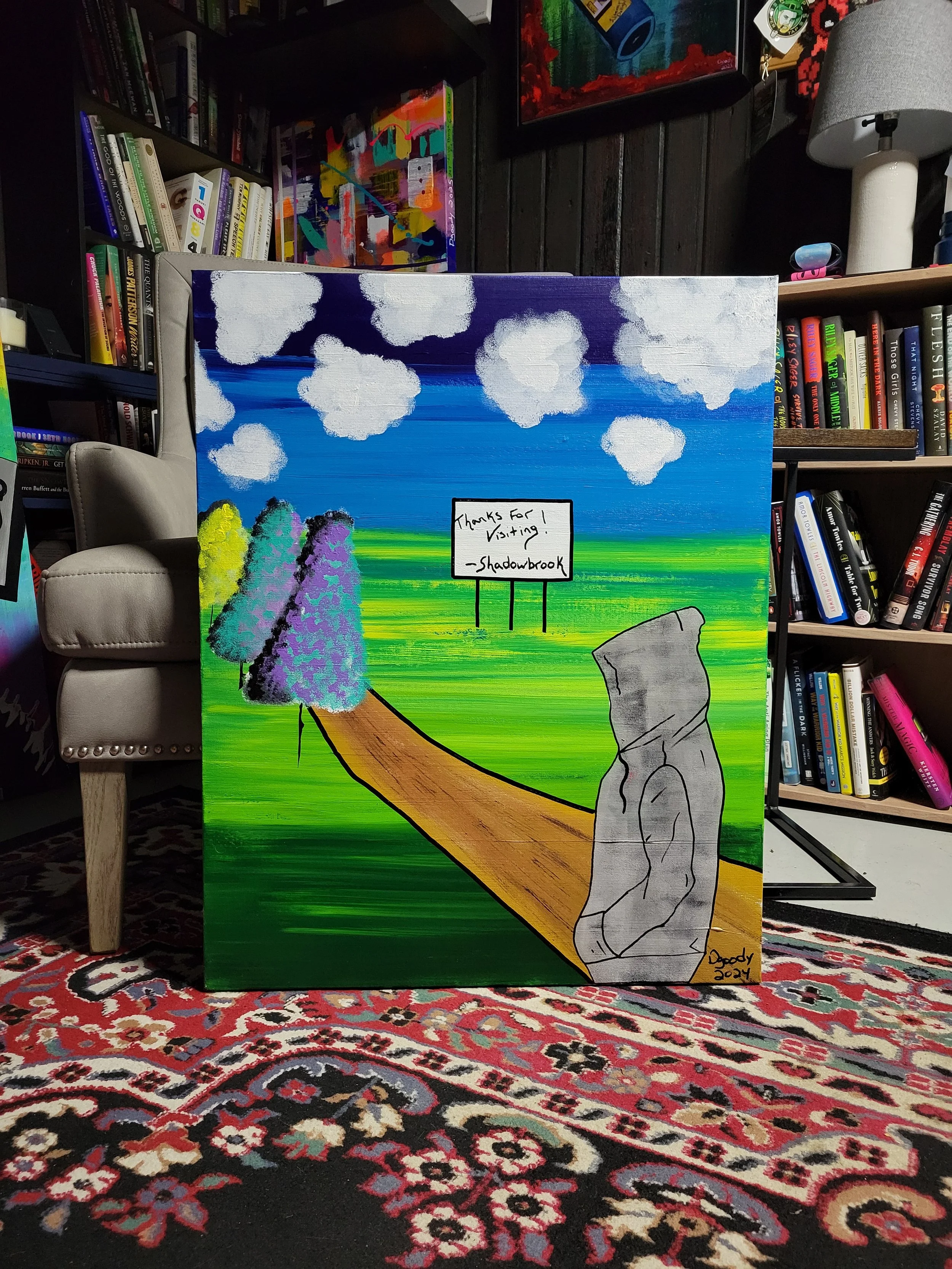
“Change Your Place to Change Your Mind” in room lighting.
He begins to understand something essential: movement interrupts fear. When he changes his place, even slightly, the narrative in his mind shifts. The intrusive thoughts lose their footing. The companion’s voice grows softer, less certain. It cannot anchor itself as easily when the scenery keeps changing.
One afternoon, he drives to a lookout point he hasn’t visited since college. The climb is steep, the air crisp, the view expansive. Shadowbrook lies below him, small and quiet, wrapped in its usual haze. But from this height, the gloom looks almost beautiful, a soft veil rather than a shroud. Ansel stands there for a long time, breathing deeply, feeling the wind press against his skin. For the first time in years, he senses a kind of spaciousness inside himself, a widening of the inner horizon.
He realizes healing is not always about conquering fear. Sometimes it is about creating enough distance from it to see clearly. Sometimes it is about stepping outside the walls of the familiar, even if only by a few feet. Sometimes it is about letting the world remind you that you are not trapped.
Image generated to show what “Change Your Place to Change Your Mind” could look like in a contemporary space.
Changing his place does not cure him. But it gives him moments. Small, luminous moments, where the companion’s voice fades and the world speaks louder. Moments where he feels the possibility of a life not governed by dread but shaped by choice.
And in those moments, Ansel begins to believe that change is not only possible, it is already happening.