Chapter 7: “Exposure Therapy”
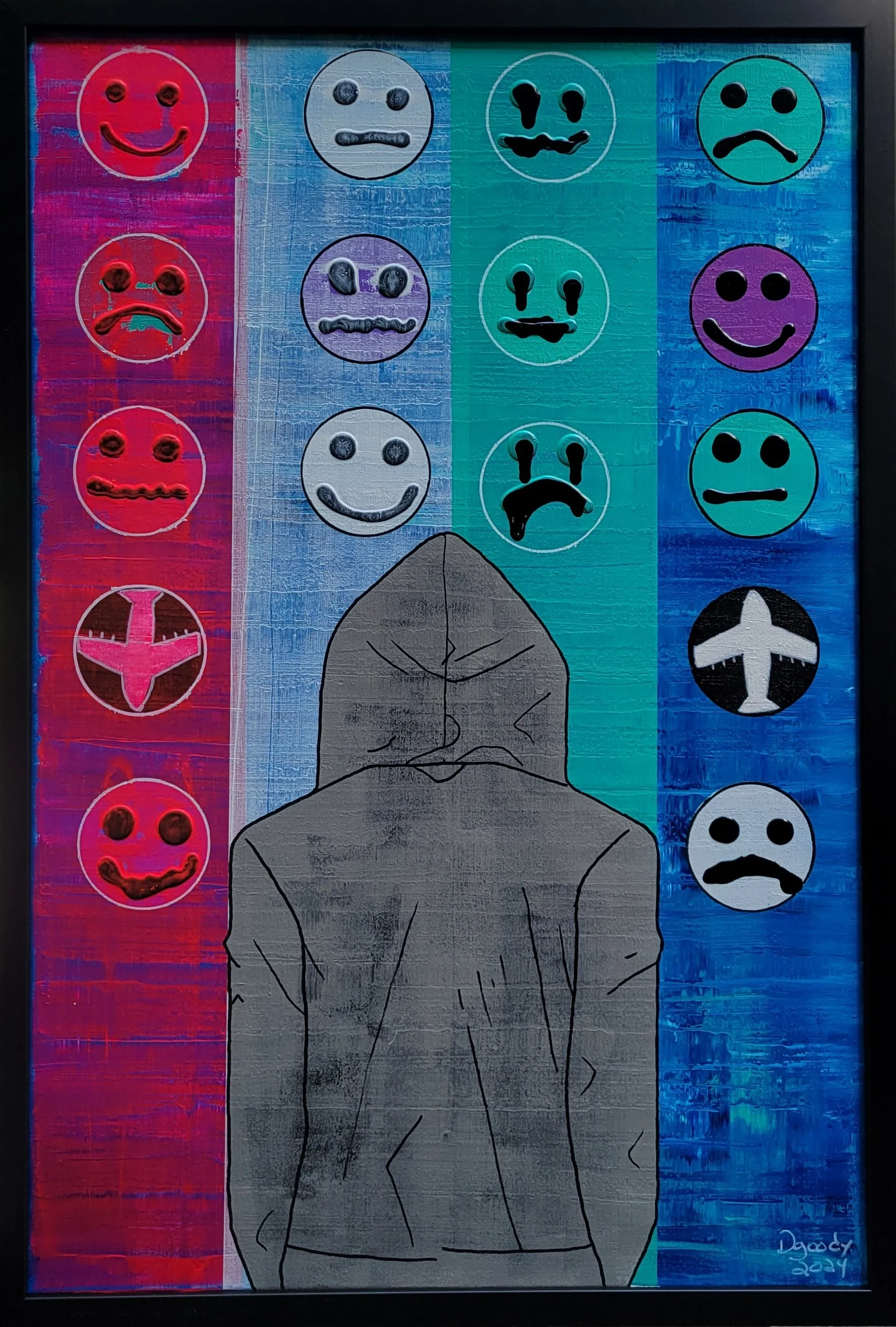
Image of a framed “Exposure Therapy”. 24 × 35 × 075 inches.
Healing rarely announces itself with loud horns and fanfare. For Ansel, it begins in a small, softly lit room with a chair that creaks when he shifts his weight and an online therapist who speaks with a calm that feels almost foreign. Exposure therapy — the phrase alone tightens something in his chest. It sounds clinical and sterile, but the work is anything but. It is raw. It is intimate. It is a slow untangling of fear.
The first sessions are a slow walk into the shallow end of a pool. His therapist asks him to name the thoughts that haunt him, to say them aloud instead of letting them fester in silence. At first, the words feel dangerous, as though saying them might make them real. But something unexpected happens: the room doesn’t collapse. The world doesn’t end. The therapist simply nods on the screen, listening with a steadiness that makes Ansel feel, for the first time in a long while, less alone.
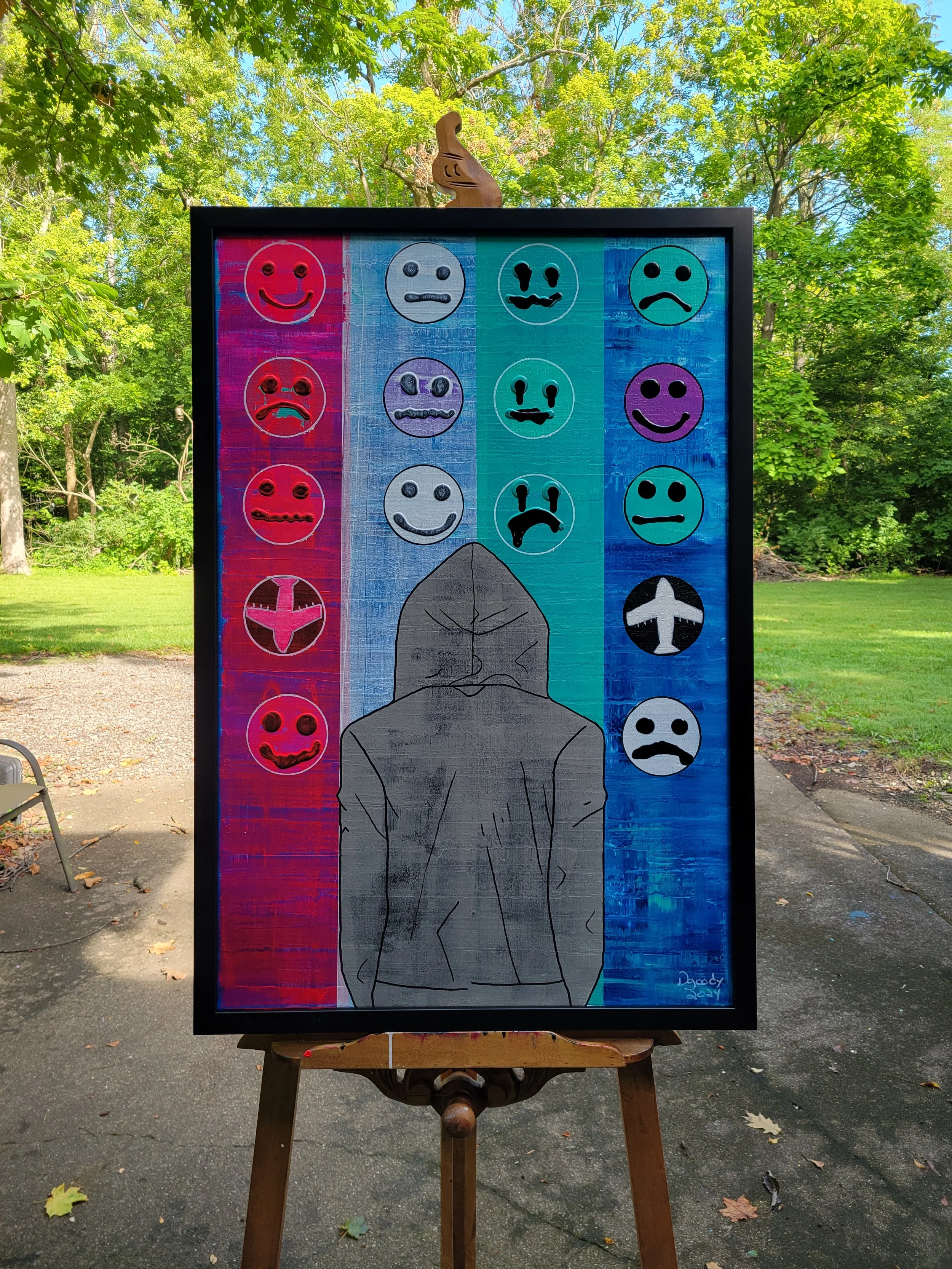
“Exposure Therapy”, exposed in natural light.
They begin with small exposures — tiny steps toward the things he avoids. Sitting with uncertainty for a few seconds longer than Ansel feels comfortable. Letting a worry pass without immediately checking, researching, or spiraling. Allowing a physical sensation to exist without interpreting it as catastrophe. These moments are brief, but they are victories. Each one is a stitch in the fabric of resilience he is slowly learning to sew.
The work is exhausting. Some days, Ansel leaves therapy feeling wrung out, as though he has spent an hour holding his breath underwater. Other days, he feels a flicker of pride — a quiet warmth in his chest that whispers, “You did something hard today”. Healing, he realizes, is not a straight line. It is a landscape of peaks and valleys, progress and relapses, courage and retreat.
As the weeks pass, the exposures grow more challenging. He practices letting intrusive thoughts drift through his mind without grabbing ahold of them. He sits with discomfort instead of scrambling to escape it. He learns to watch fear rise and fall like an ocean tide, discovering that it does not drown him, but recedes. Slowly and painfully, but reliably.

“Exposure Therapy” mocked up in a contemporary setting.
There are moments when he falters. Nights when the unwelcome companion returns with renewed vigor. Days when doubt whispers that he is incapable of change. But therapy teaches him something essential: fear is not a verdict. It is a sensation. A momentary wave. A story the mind tells. And stories can be rewritten.
Ansel begins to notice subtle shifts. There are now mornings where he doesn’t immediately brace for disaster. A conversation where he doesn’t reexamine every word after. A walk through Shadowbrook where the fog feels less like a threat and more like a backdrop. These changes are small, almost imperceptible, but they accumulate. They form a quiet momentum.
Exposure therapy does not silence the intrusive thoughts. It teaches him to coexist with them without surrendering. It gives him tools — breath, patience, perspective — that allow him to step into his life with a little more steadiness. A little more trust. A little more light.
Healing, he learns, is not the absence of fear. It is the willingness to move forward in spite of it.