Chapter 6: “Passage Toward Light”
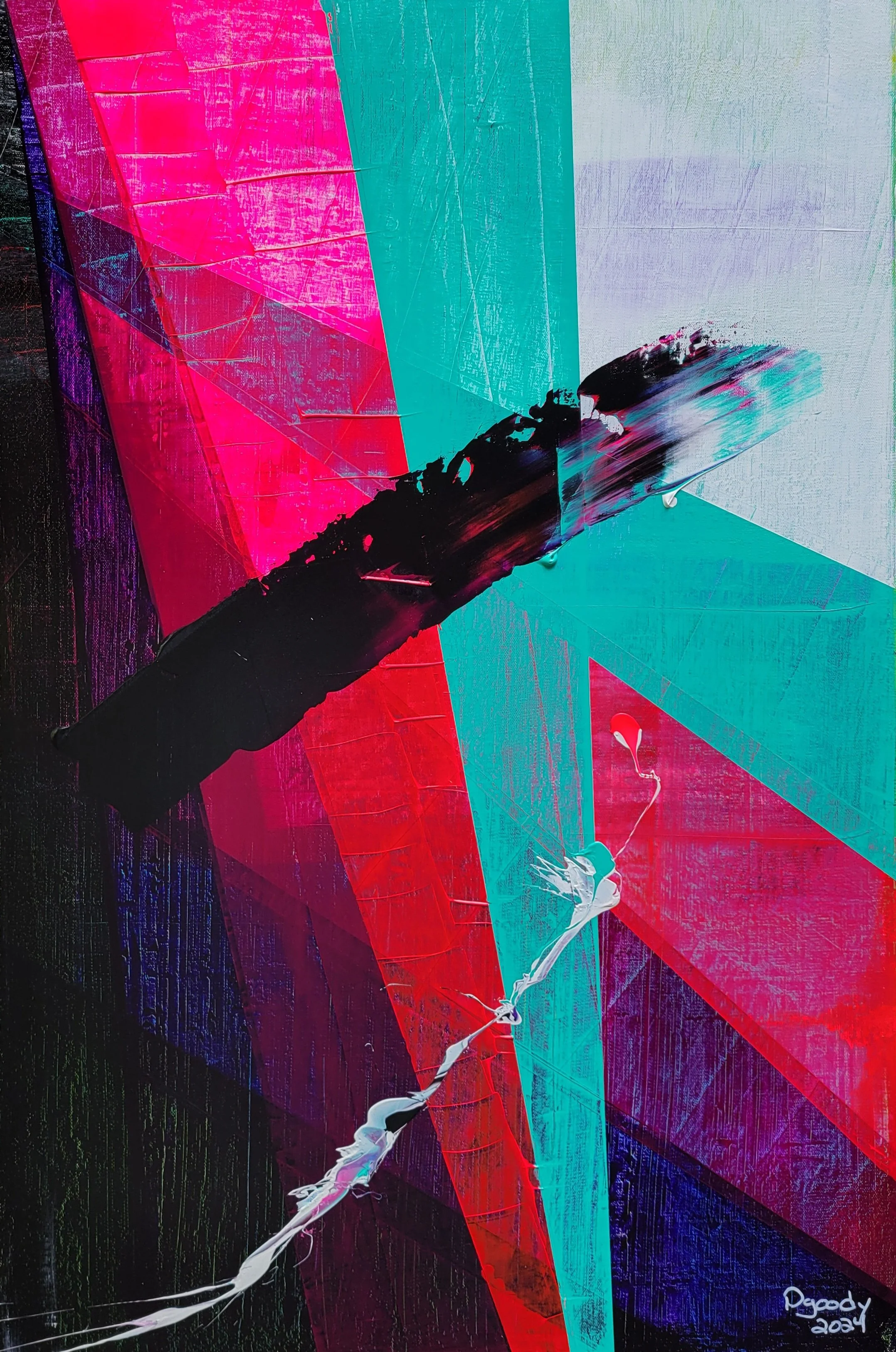
Close up of “Passage Toward Light”. Acrylic on a 24 × 36 × 1.5-inch gallery profile canvas.
Morning in Shadowbrook often arrives muted, the sun filtered through layers of fog and mist. Yet for Ansel, even this dim light feels like a reprieve. A fragile democracy restored after the tyranny of night. The coup has ended, the shadow cabinet dissolved, and the Mayor of Despair resumes his post. But something is different. He is no longer content to govern by fear alone. He is drafting mental reform for cognitive transition.
Ansel begins small. He treats each coping strategy as legislation, each act of resilience as policy. A walk by the Brookshade River becomes a bill passed in favor of calm. A sketch in his notebook is an ordinance protecting creativity. Even the simple ritual of brewing coffee is framed as a declaration of personal independence and proof that despair cannot monopolize his mornings. These reforms are modest, but they are real. They remind him that governance is not only about responding to crises; it is about shaping the future.

“Passage Toward Light” in natura light.
Driving becomes his metaphor for a passage toward progress. Behind the wheel, he feels a rare sense of agency. The road stretches ahead like an unwritten constitution, each mile a clause, each turn a possibility. The unwelcome companion still rides along, whispering of accidents, breakdowns, and disaster. But Ansel counters with his own decrees: “I choose the direction”. “I choose the speed”. “I choose the destination”. For once, the companion is not mayor, not clerk, not tyrant. It is merely a passenger.
The act of taking a passage toward light, literally chasing the sun through Shadowbrook’s fog, becomes a ritual of defiance. Each journey is a campaign against despair, a reminder mental governance can be reclaimed. The city of his mind, once ruled entirely by fear, begins to show signs of reform. Hope drafts legislation. Resilience wins seats on the council. Even joy, tentative and soft-spoken, begins to attend the meetings again.
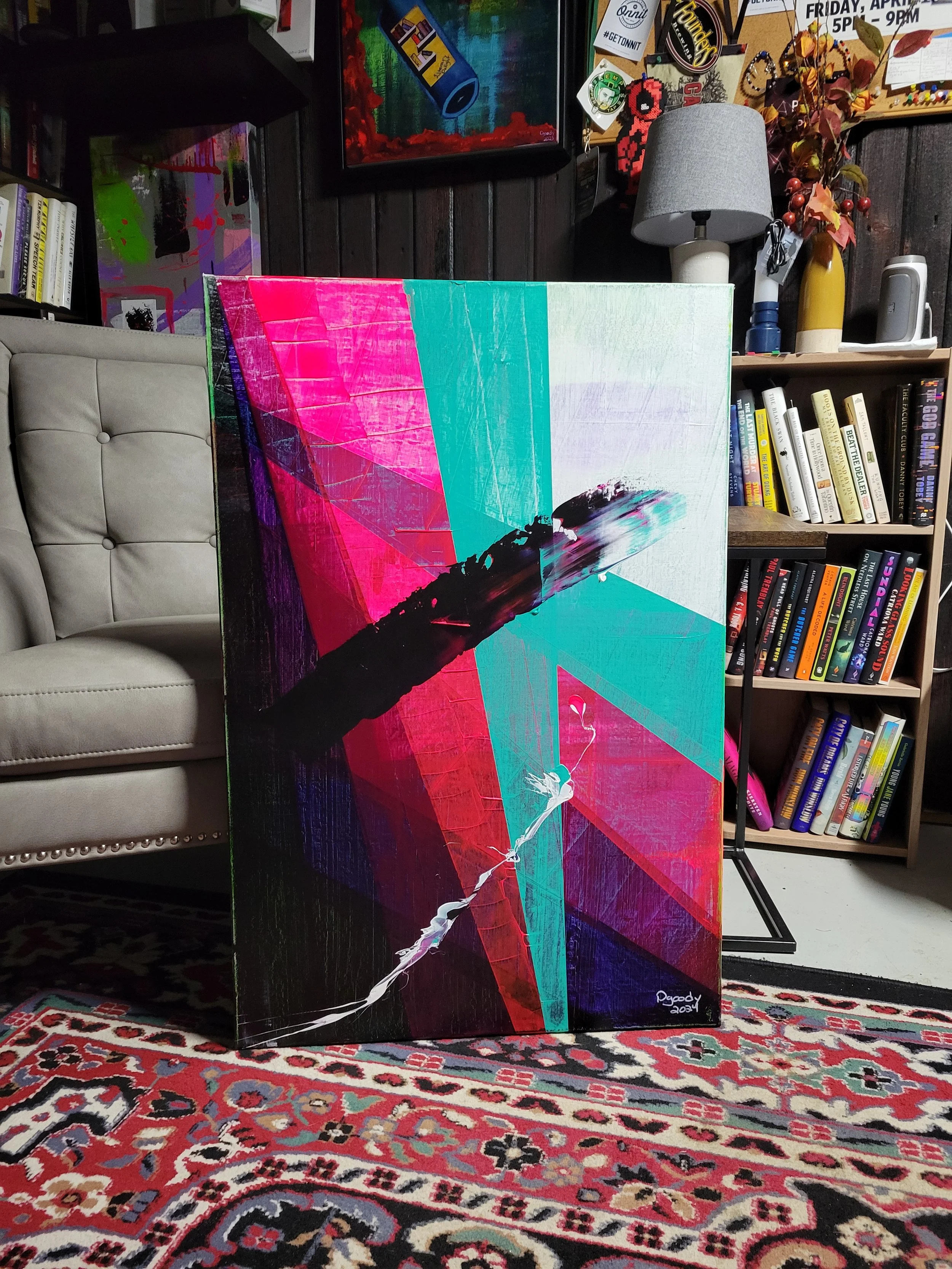
Passage Toward Light. Acrylic on 24 × 36 × 1.5-inch gallery profile canvas.
Ansel knows the government of his mind will never be free of opposition. The companion will always lobby for fear, always attempt to stage its coups. But he is learning that governance is not about eliminating dissent; it is about refusing to let it rule. He can acknowledge the voice without obeying it. He can hear the warnings without enacting them as law.
Taking a passage toward light is not a cure. It takes discipline, repetition and consistency. A reminder that despair may dominate the night, but dawn belongs to him. And as the fog and mist begin to thin, Ansel feels the possibility of a new constitution. One written by courage, rather than fear.
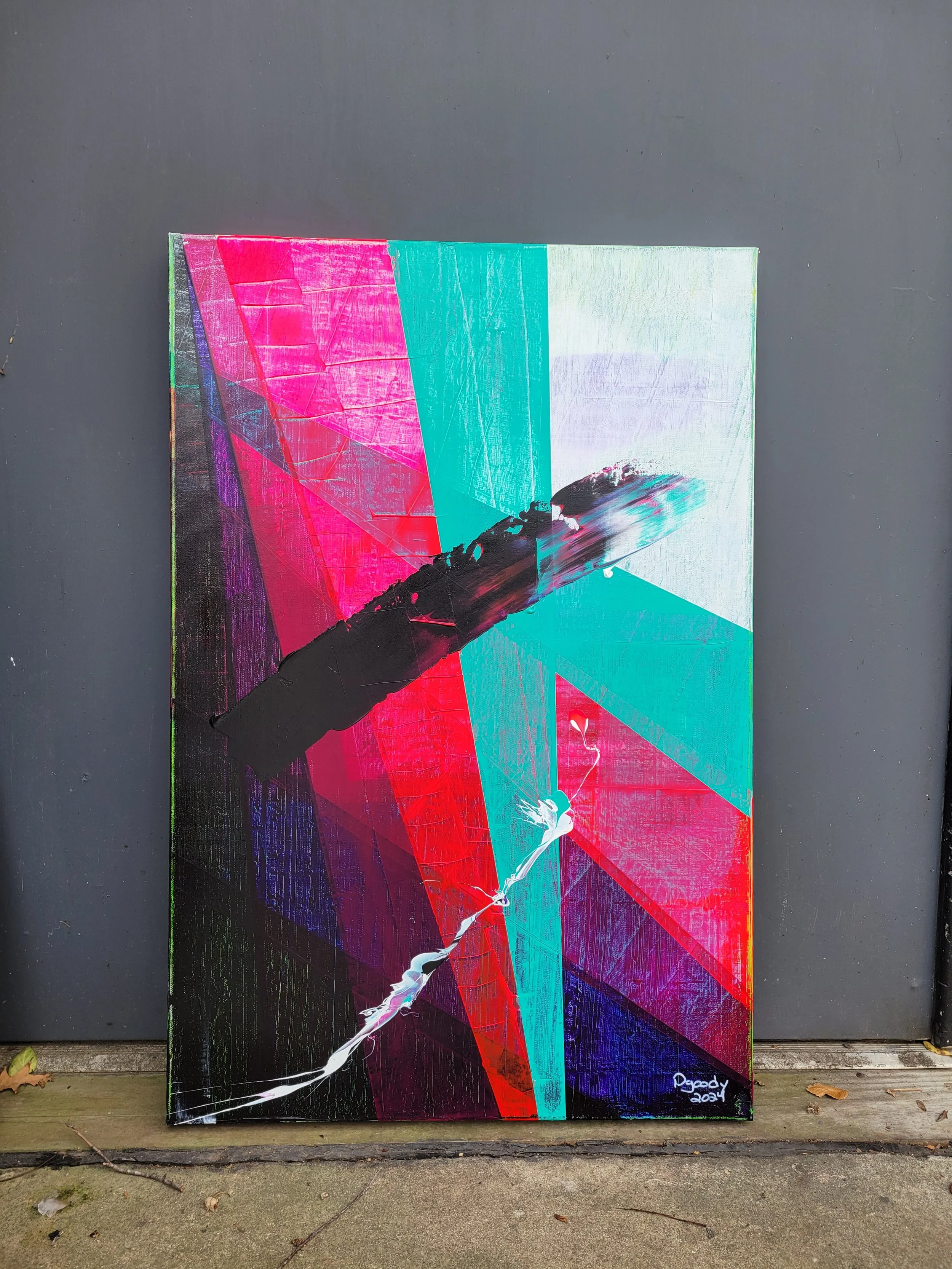
Passage Toward Light. Acrylic on 24 × 36 × 1.5-inch gallery profile canvas.
✅ Sanctioned Practices for Positive Cognitive Transition
Sanctioned practices for supporting positive cognitive transition are rooted in evidence-based approaches from clinical psychology, particularly cognitive behavioral therapy (CBT). One of the most effective techniques is cognitive reframing, which involves identifying negative thought patterns and deliberately replacing them with more balanced, constructive alternatives. Alongside this, gratitude training encourages individuals to regularly reflect on positive aspects of their lives, helping to rewire neural pathways toward optimism and resilience.
Another powerful tool is mindfulness and meditation, which cultivate present-moment awareness and reduce the tendency to ruminate on negative experiences. Similarly, visualization practices—creating vivid mental imagery of success or positive outcomes—can shift mindset and reinforce adaptive thinking. Positive affirmations also play a role, as repeating supportive self-statements strengthens healthier beliefs through neuroplasticity.
Beyond thought-based strategies, behavioral activation emphasizes scheduling meaningful and enjoyable activities to break cycles of negativity and reinforce positive emotions. Finally, social connection enhancement—building and maintaining supportive relationships—provides a buffer against stress and reinforces positive cognitive states through shared experiences and encouragement.
Together, these practices form a clinically sanctioned toolkit that helps individuals transition from negative to positive cognition, fostering resilience, emotional balance, and healthier mental functioning.
⚠️ Key Considerations
These practices are sanctioned in clinical psychology and psychiatry, especially within CBT frameworks.
They are not substitutes for professional care when someone experiences persistent or severe cognitive or emotional difficulties.
Effectiveness depends on consistency and personalization—techniques should be tailored to the individual’s context and needs.